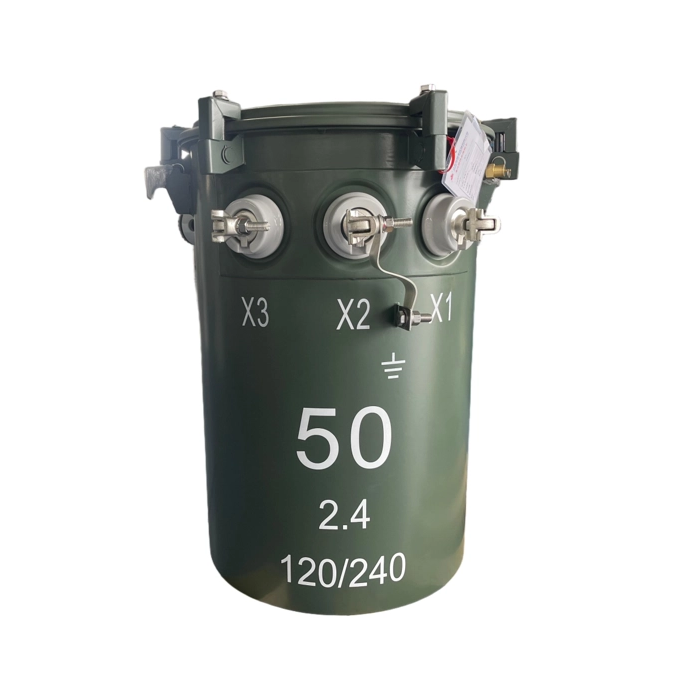
This 50kVA distribution transformer is designed for medium-voltage distribution applications, with primary voltage options of 2.4kV and 4.16kV and a secondary voltage of 120/240V. Its compact and practical design makes it suitable for residential power distribution, rural electrification, light commercial applications, and other utility distribution systems.
| Availability: | |
|---|---|
| Quantity: | |
D-M-50-2.4(4.16)kV
YAWEI
The 50kVA oil immersed distribution transformer (Model: D-M-50) is developed for reliable medium-voltage power distribution in residential, utility, rural, and small commercial networks. Available with a 2.4kV or 4.16kV primary voltage and a 120/240V secondary output, this transformer provides a practical voltage conversion solution for low-voltage power supply systems. Its oil-filled construction combines electrical insulation with effective heat dissipation, supporting stable operation in outdoor distribution environments. The transformer can be configured to suit different utility specifications and installation requirements.
Designed for distribution systems using either 2.4kV or 4.16kV primary voltage, this transformer offers greater flexibility for different utility networks. The 120/240V secondary configuration is suitable for supplying residential loads, small commercial facilities, and other low-voltage consumers.
The transformer uses insulating oil as both an electrical insulation medium and a heat-transfer medium. During operation, heat generated by the core and windings is effectively transferred to the surrounding oil and dissipated through the tank, helping maintain dependable operating performance.
A robust transformer tank and carefully designed internal components provide protection for the active part against common environmental influences. The construction is suitable for outdoor distribution applications where equipment may be exposed to changing weather and operating conditions.
The transformer is engineered to provide consistent voltage conversion from the medium-voltage supply to the 120/240V low-voltage system. High-quality magnetic core and winding components contribute to dependable electrical performance and efficient power delivery during normal operating conditions.
With its compact capacity and flexible voltage configuration, the 50kVA distribution transformer can be applied to residential neighborhoods, rural power networks, light commercial buildings, and utility distribution projects. Its practical design makes it a suitable choice for applications requiring dependable low-voltage power from a medium-voltage network.
| Type | Single phase pole mounted transformer |
| Model | DM-50-2.4(4.16)-0.12(0.24) |
| Installation | Outdoor |
| Altitude | ≤1000m |
| Rated Power | 50KVA or others |
| Cooling Method | ONAN |
| Primary Voltage | 2400/4160V or others |
| Secondary Voltage | 120/240V or others |
| Rated Frequence | 60HZ |
| Insulation oil | Mineral oil |
| Tapping Range | +2×2.5% |
| Temperature rise℃) | 65 |
| Connection Group | lio |
The 50kVA oil immersed distribution transformer can be deployed in a variety of medium- and low-voltage power distribution scenarios. Typical applications include residential communities, rural distribution networks, agricultural facilities, small commercial buildings, utility infrastructure, and temporary or auxiliary power systems. With 2.4kV and 4.16kV primary voltage options and a 120/240V secondary output, it can provide a dependable power supply for homes, small businesses, irrigation equipment, lighting systems, telecommunications facilities, and other low-voltage loads.
YAWEI applies established manufacturing and inspection procedures throughout the production of its oil immersed distribution transformers. Each transformer is subjected to routine factory tests to verify key electrical and mechanical performance before delivery. Depending on the applicable technical specification, testing may include winding resistance, insulation performance, voltage ratio, dielectric withstand, no-load characteristics, and other required inspections.
Quality control begins with the inspection of incoming materials and continues through core assembly, winding, tank fabrication, oil filling, final assembly, and testing. This controlled production process helps ensure reliable electrical performance, consistent manufacturing quality, and dependable service life.
With more than 30 years of experience in transformer manufacturing, YAWEI has developed extensive expertise in the design and production of distribution and power transformers for international markets. We combine experienced engineering capabilities, controlled manufacturing processes, carefully selected materials, and systematic factory testing to provide dependable transformer solutions.
Whether for residential distribution, rural electrification, agricultural power supply, or commercial projects, YAWEI works closely with customers to provide transformer configurations that match their voltage, capacity, installation environment, and project requirements.
The following guidelines provide a general reference for the installation and commissioning of distribution transformers. Actual installation work should always be carried out by qualified electrical personnel in accordance with the transformer manufacturer's technical documentation, applicable local regulations, and relevant electrical safety standards.
Inspect and prepare the installation location before the transformer is delivered. Ensure that the foundation or supporting structure is properly constructed, level, stable, and capable of supporting the transformer and associated equipment. Adequate clearance, grounding facilities, and safe access for installation and maintenance should also be provided.
For pole-mounted applications, install the designated utility pole and supporting hardware in accordance with the approved engineering design. Verify the structural strength, vertical alignment, mounting position, and fastening points before lifting the transformer into position.
Inspect the transformer and its accessories for any signs of damage before installation. Install the required bushings, mounting hardware, grounding connections, and other accessories according to the manufacturer's drawings and instructions. All mechanical connections should be properly secured before electrical connections are made.
Connect the high-voltage and low-voltage conductors according to the transformer nameplate, wiring diagram, and approved electrical design. Check phase identification, terminal connections, conductor clearances, grounding, and connection tightness carefully. All electrical connections must comply with applicable safety requirements and local electrical codes.
Before energizing the transformer, qualified personnel should perform the required visual, mechanical, and electrical inspections. Depending on the applicable specification, tests may include insulation resistance, winding resistance, voltage ratio, polarity or phase relationship, dielectric withstand, grounding continuity, and other routine checks.
After confirming that all test results are within the specified limits and that the installation is safe and complete, the transformer may be placed into service in accordance with the approved commissioning procedure.
Important: Installation, testing, and commissioning must be performed by qualified professionals. Always refer to the specific transformer manufacturer's drawings, technical specifications, and operating instructions before installation or energization.
