
English
Views: 0 Author: Site Editor Publish Time: 2026-05-27 Origin: Site


Specifying the right transformer architecture is high-stakes engineering. Selecting the wrong core configuration severely impacts thermal management, footprint constraints, and long-term maintenance logistics. Grid stability relies heavily on these design choices, meaning engineers cannot afford guesswork. We must move beyond textbook definitions to build a highly practical evaluation framework. You need to deeply assess mechanical strength, exact voltage requirements, and actual operational environments before finalizing a design.
This article provides empirical performance data to guide your selection process. We prioritize long-term reliability and physical resilience over mere upfront capital expenditure. You will learn exactly how flux paths and coil structures dictate real-world performance under stress. By evaluating natural cooling advantages against short-circuit withstand capabilities, we empower your procurement strategy. You can confidently match your specific load profile to the optimal transformer architecture.
Voltage vs. Current: Core type transformers are typically optimal for high-voltage, low-current applications, whereas shell type designs excel in low-voltage, high-current environments.
Maintenance Realities: Core type designs allow for significantly easier field inspections and winding repairs due to accessible coil placements.
Mechanical Resilience: Shell type transformers offer superior natural short-circuit withstand capabilities due to the core surrounding the windings, though modern bracing techniques have closed this gap for core types.
Sourcing: Selecting a qualified Core Type Transformer manufacturer requires verifying stringent testing protocols (IEC/IEEE) and custom engineering capabilities for specific load profiles.
Understanding fundamental construction differences helps engineers anticipate long-term behavior. The core and shell classifications describe how manufacturers arrange the magnetic steel limbs relative to the copper or aluminum windings. This structural geometry dictates nearly every operational characteristic.
In a Core Type Transformer, the windings physically encircle the magnetic core limbs. Manufacturers typically utilize cylindrical coils for this configuration. These coils stack around the core, maximizing the exposed outer surface area. This exposed copper facilitates excellent heat dissipation. The design creates a single magnetic circuit. Consequently, flux travels through a solitary path, which slightly increases the potential for leakage flux.
Conversely, a shell type structure features a magnetic core surrounding the inner windings. Engineers standardly employ sandwich-type or disc coils here. These coils nest inside the steel core, creating a highly compact magnetic circuit. The shell configuration forms a double magnetic circuit. Flux divides into two parallel paths upon leaving the central limb. This division effectively halves the flux density in the outer limbs, reducing overall leakage flux.
To summarize these fundamental architectural variations, review the comparison chart below.
Specification Feature | Core Type Architecture | Shell Type Architecture |
|---|---|---|
Winding Placement | Encircles the magnetic core limbs | Encircled by the magnetic core |
Coil Design | Cylindrical coils (concentric) | Sandwich-type or disc coils |
Magnetic Circuit | Single path | Double path |
Leakage Flux | Slightly higher | Significantly minimized |
Aligning structural geometry with your intended electrical load ensures optimal system efficiency. Engineers must evaluate specific thresholds before committing to a design.
Voltage ratings heavily influence the ideal architecture choice. A core type design typically excels in Extra High Voltage (EHV) networks and standard high-voltage transmission systems. Placing the windings on the outside allows engineers to manage high-voltage insulation much more effectively. Space utilization remains highly efficient, as designers can layer insulation materials seamlessly between the high and low voltage concentric cylinders.
Shell type units serve a very different electrical demographic. They perform best in specialized heavy-industrial applications demanding extreme high current at lower voltages. Arc furnaces provide a prime example. The massive current spikes in such operations require the robust, low-impedance pathways inherent to shell structures.
Heat degrades insulation faster than almost any other variable. Thus, cooling efficiency directly dictates equipment lifespan.
Natural Cooling Advantages: The core type design inherently promotes better natural cooling. Because the outer windings remain fully exposed to the surrounding oil or air, thermal transfer occurs rapidly. Convection currents flow freely across the cylindrical surfaces.
Forced Cooling Dependencies: Shell type configurations struggle with thermal gradients. The steel core encapsulates the windings, trapping heat deep inside the unit. Dissipating this centralized heat often requires complex forced cooling systems. Engineers must rely heavily on pumps and directed oil flows to prevent internal hot spots.
Electrodynamic forces during a short circuit act like physical sledgehammers against internal components. Structures must withstand these violent mechanical shocks.
Shell types boast inherent mechanical bracing against these electro-dynamic forces. The heavy steel core completely surrounds the fragile coils, acting like a protective armor casing. This prevents the coils from expanding or distorting during violent fault currents.
A core type unit historically struggled under similar fault conditions. However, modern engineering interventions have effectively closed this gap. Manufacturers now implement highly specialized clamping structures, robust axial supports, and precisely engineered tie-rods. These active bracing techniques ensure the exposed windings remain perfectly rigid during maximum fault conditions.
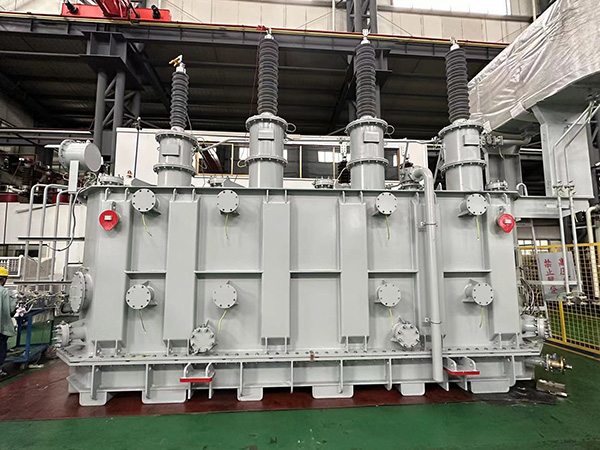
Field maintenance practicalities often override theoretical performance metrics. When equipment fails, diagnostic speed and repair accessibility become paramount concerns for utility operators.
Inspection accessibility clearly favors core configurations. Because the windings sit on the outside of the magnetic limbs, technicians can easily perform visual inspections. They can quickly assess insulation degradation, check coil bracing, and identify deformation without dismantling the entire active part. This exposed nature significantly reduces diagnostic downtime. In contrast, diagnosing a shell type unit requires substantial effort. The enclosed nature hides the coils, forcing maintenance crews to untank and unstack the heavy magnetic core just to view the copper.
Repair and rewinding logistics further differentiate the two architectures. If a catastrophic failure occurs, recovery timelines diverge sharply. Technicians can often repair core type units on-site or using standard local facility equipment. Removing a damaged cylindrical coil simply involves lifting it off the vertical core limb. Shell types typically require a complete factory return. Unstacking the interleaved core laminations to free a damaged sandwich coil demands specialized factory environments and extensive labor hours.
Weight and transportation logistics also complicate deployment. Moving fully assembled units to remote substations presents distinct challenges. Core structures generally feature taller, narrower profiles. This allows for easier transportation along standard road widths, though bridge clearances require monitoring. If facilities lack space, maneuvering a disassembled core unit proves far easier than managing the massive, dense components of a shell unit.
Commercial and utility grids rely on standardized, repeatable solutions. Analyzing market preferences reveals exactly why distribution networks heavily favor core configurations over shell alternatives.
First, manufacturing scalability plays a massive role. Fabricating cylindrical coils around straight magnetic limbs is highly automatable. This streamlined production process lowers overall manufacturing complexity. Consequently, utilities can source these units rapidly to support expanding grid infrastructures.
Second, a Core Type Transformer provides a highly favorable balance of operational traits. It marries excellent cooling efficiency with profound ease of maintenance. When deployed across standardized voltage steps within a municipal grid, these units deliver consistently reliable performance. Grid operators appreciate predictable maintenance schedules. The ability to perform quick field diagnostics ensures neighborhoods remain powered with minimal interruption.
Finally, standard distribution grids rarely experience the extreme, sustained high-current scenarios found in heavy industrial smelting. They primarily require efficient voltage stepping. The core architecture meets this exact need perfectly, rendering the heavy-duty shell structure unnecessary for standard utility applications.
Sourcing the right equipment requires rigorous vendor qualification. You cannot evaluate a Core Type Transformer manufacturer based on brochures alone. Procurement teams must scrutinize engineering capabilities and testing transparency.
Standard Compliance: Always verify strict adherence to IEEE/ANSI, IEC, or specific regional grid codes. A reputable vendor will provide certification documentation proving their designs meet or exceed these global benchmarks.
Customization vs. COTS: Commercial Off-The-Shelf (COTS) units work for generic loads. However, specialized facilities demand customization. Evaluate the manufacturer's ability to precisely adjust impedance levels, footprint dimensions, and loss profiles. They must engineer the unit to match your exact facility needs.
Factory Acceptance Testing (FAT): Demand absolute transparency during FAT. You must actively monitor partial discharge results, impulse testing data, and temperature-rise test outcomes. This empirical data guarantees the unit handles its rated stresses before it ever leaves the factory floor.
Post-Installation Support: Hardware alone is insufficient. Assess the vendor's warranty terms thoroughly. Investigate their local service footprint and guarantee immediate spare parts availability to prevent extended future downtimes.
Selecting the ideal architecture requires balancing electrical load characteristics against mechanical constraints. You should default to a core type design for standard high-voltage transmission and utility distribution. Its superior cooling, easier maintenance, and excellent scalability make it the logical baseline choice. Reserve shell type structures strictly for highly specialized, extreme high-current industrial applications where robust inherent mechanical shielding is non-negotiable.
As a clear next step, engineers and procurement teams must finalize their specific load profiles and site environmental constraints. Map out your exact voltage requirements, physical footprint limits, and maintenance capabilities before requesting custom quotes from qualified manufacturers. This proactive data gathering ensures your final specification guarantees decades of reliable grid performance.
A: Core types generally experience slightly higher leakage flux. They utilize a single magnetic circuit, meaning flux travels along one continuous path. This geometry provides less containment than a shell design. However, modern engineering mitigates this issue using advanced magnetic shielding and optimized coil geometries.
A: Shell types possess inherent structural robustness because the heavy steel core physically encloses the fragile windings. Core types rely on engineered robustness. Manufacturers must install specialized clamping systems and axial tie-rods to ensure the exposed windings withstand equivalent electrodynamic short-circuit forces.
A: The windings on a core type sit on the outside of the magnetic limbs. Technicians can visually inspect and slide these cylindrical coils off the limb relatively easily. Shell types enclose the coils inside the core, requiring labor-intensive unstacking of steel laminations just to access the copper.
A: Yes, architecture significantly alters physical dimensions. A core type unit typically features a taller, narrower footprint, making it suitable for tight substation spaces but requiring higher overhead clearance. A shell type is usually shorter and wider, impacting ground-level layout planning.


