
English
Views: 0 Author: Site Editor Publish Time: 2026-05-21 Origin: Site


Selecting a transformer architecture represents more than a simple technical preference. It heavily dictates maintenance accessibility, physical footprint, and overall facility reliability. System planners and engineers must balance thermal efficiency against mechanical robustness when designing optimal power distribution networks.
A Core Type Transformer provides distinct natural cooling and serviceability advantages. In this design, the copper or aluminum windings physically encircle the central magnetic core. This geometry exposes more coil surface area to cooling mediums. However, misunderstanding its structural nuances often leads to suboptimal facility planning and operational inefficiencies.
We will explore the fundamental anatomy and construction of these critical electrical assets. You will learn how material economics and phase configurations directly influence system performance. Finally, we provide an evidence-based framework to help procurement teams evaluate core architectures, optimize material losses, and confidently assess manufacturer testing capabilities.
Core type designs maximize winding surface area, offering superior natural heat dissipation compared to shell type configurations.
Concentric winding arrangements (Low Voltage inside, High Voltage outside) simplify insulation requirements and expedite routine inspections.
Upgrading core materials (e.g., from standard CRGO to Amorphous steel) drastically reduces constant no-load losses, accelerating long-term ROI despite higher initial capital expenditure.
Selecting a reliable manufacturer requires verifying rigorous factory acceptance testing, including Transformation Turns Ratio (TTR) and core loss validation.
The foundational geometry of this transformer type relies on vertical magnetic columns, known as limbs or legs. Horizontal magnetic sections, called yokes, connect these vertical limbs at the top and bottom. Together, they form a continuous closed path for the magnetic flux. The assembled steel frame acts as the structural backbone for the entire unit. Conductive windings wrap directly around these vertical limbs. This distinct configuration ensures efficient magnetic coupling while keeping the coils easily accessible from the exterior.
Engineers consistently employ a concentric winding arrangement to optimize material costs and safety. Assembly teams wrap the Low Voltage (LV) coils closest to the central steel core. They then position the High Voltage (HV) coils concentrically outside the LV windings. This specific arrangement yields massive benefits for electrical insulation. Because the core operates at ground potential, placing the LV coil next to it requires minimal insulation material. If the HV coil sat next to the grounded core, the design would require excessively thick, expensive insulation layers to prevent arcing. Furthermore, this outer placement significantly reduces the risk of catastrophic high-voltage core strikes during electrical surges.
Heat kills electrical equipment. Fortunately, core-type configurations excel at thermal management. Placing the windings on the outside exposes maximum coil surface area to the surrounding environment. This exposed geometry inherently supports highly efficient natural cooling. When engineers enclose the assembly in an oil-filled tank, the design promotes optimal fluid circulation around the hot conductors. Facilities can easily upgrade these units to forced air or forced oil cooling systems, making them highly adaptable for variable load demands.
Facility planners must weigh field serviceability against physical durability. Outer windings allow technicians to perform immediate visual inspections. If a specific outer coil faults, maintenance teams can strip it down and repair it directly in the field. Shell-type designs embed the windings deep inside the magnetic steel shell. This limits visual access and drastically complicates repair work.
However, this accessibility comes at a mechanical cost. The encapsulating steel of a shell-type unit provides superior physical bracing. It securely clamps the windings, offering exceptional resistance against the violent mechanical stresses generated during short circuits. A standard core-type unit requires robust external clamping structures to achieve similar short-circuit withstand capabilities.
Magnetic flux behavior varies significantly between architectures. The concentric arrangement inherently exhibits a slightly different leakage flux profile compared to the interleaved "pancake" coils commonly found in shell types. Leakage reactance directly impacts voltage regulation under variable facility loads. While concentric coils keep flux leakage manageable, highly specialized applications requiring ultra-low leakage often lean toward interleaved designs. Planners must calculate their precise impedance requirements before finalizing the specification.
Different power grids demand different structural strengths. Engineers predominantly favor core designs for high-voltage power transmission and large-scale distribution networks. The exceptional cooling capacity and straightforward scalability make them ideal for handling massive, steady voltage levels. Conversely, facilities experiencing frequent short-circuit hazards or requiring low-profile underground vaults might pivot toward shell designs.
Feature/Metric | Core Type Transformer | Shell Type Transformer |
|---|---|---|
Winding Placement | Encircles the magnetic core limbs. | Encased within the magnetic core shell. |
Cooling Efficiency | Excellent natural heat dissipation. | Restricted airflow/oil flow around coils. |
Maintenance Access | High. Windings easily reachable. | Low. Requires dismantling the core. |
Short-Circuit Strength | Moderate. Requires extra clamping. | High. Steel shell braces coils naturally. |
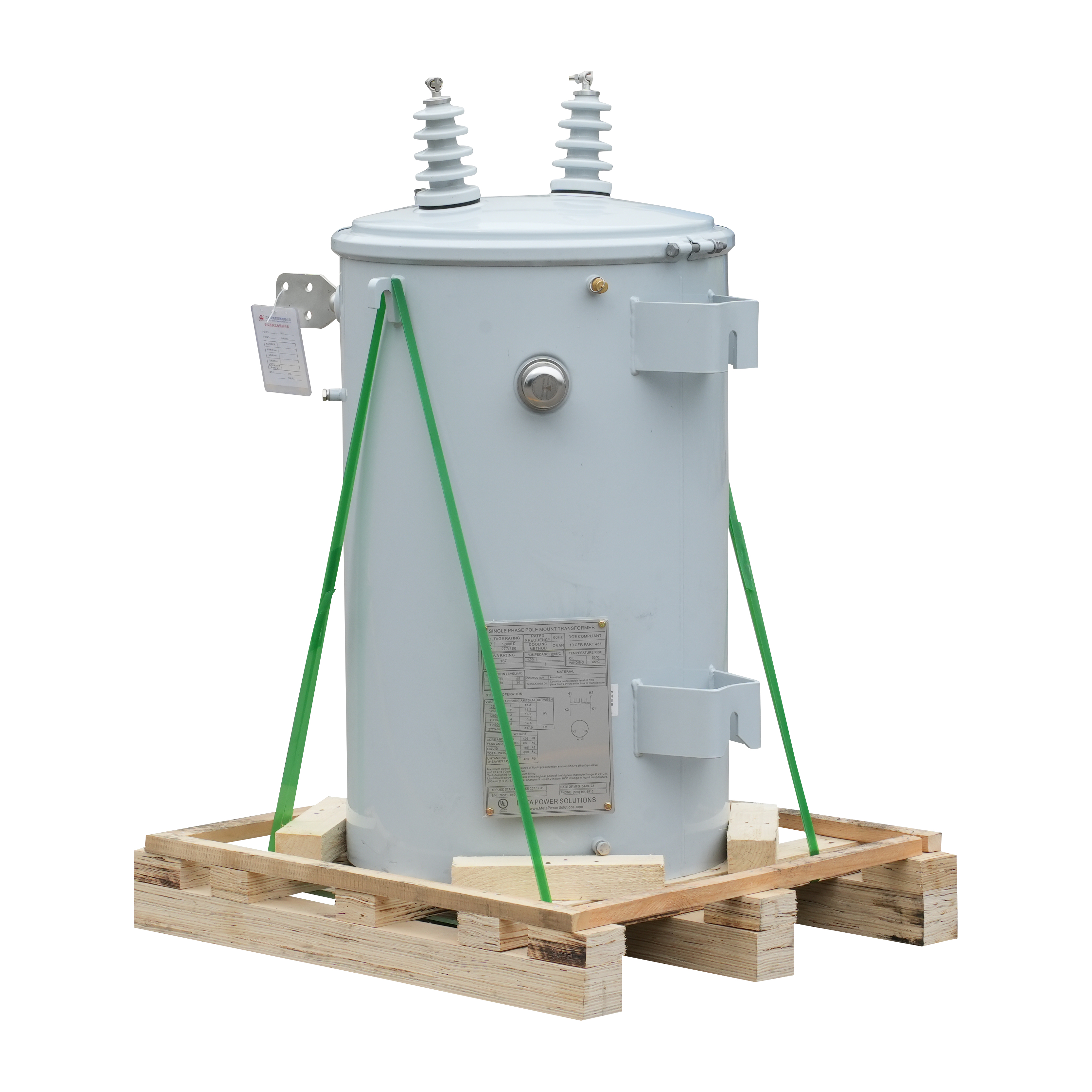
Structural choices heavily influence manufacturing costs, physical footprint, and magnetic performance. Engineers customize the limb and yoke arrangements based on specific site constraints and phase requirements.
Single-Phase Double-Leg Designs: This traditional configuration uses two vertical limbs. Half of the LV winding and half of the HV winding sit on each leg. It balances the magnetic flux perfectly but occupies a wider physical footprint.
Single-Phase Single-Leg Side-Yoke Designs: Space-saving environments demand tighter engineering. This variant wraps all windings around a single central column. Extra side yokes provide the return path for the flux. This effectively reduces the overall unit height.
Three-Phase 3-Limb Cores: The industry standard for three-phase power. It features three vertical columns, one for each phase. It offers excellent material economy and straightforward manufacturing.
Three-Phase 5-Limb Cores: Massive power distribution units face transportation limits. A 5-limb core reduces the required yoke thickness, significantly lowering the overall height for highway transport. Additionally, the outer un-wound limbs provide a reliable zero-sequence flux return path. This prevents severe overheating during unbalanced load conditions.
The choice of core material dictates the constant energy drain of the system. Planners must evaluate upfront capital costs against long-term operational savings.
Cold-Rolled Grain-Oriented (CRGO) Steel: Manufacturers universally rely on CRGO steel for its optimal cost-to-performance ratio. The cold-rolling process aligns the metallic grain structure, significantly increasing magnetic permeability. Assembly teams utilize step-lap mitred joints where the limbs meet the yokes. This specialized overlapping technique minimizes air gaps, reduces magnetic reluctance, and maximizes flux density.
Amorphous Metal Cores: Forward-thinking facilities often upgrade to amorphous steel. Unlike the crystalline structure of CRGO, amorphous metals feature a randomized, non-crystalline atomic structure. This unique property delivers exceptionally high electrical resistance. Consequently, it cuts no-load hysteresis and eddy current losses by an astonishing 70% to 80%. Planners view amorphous cores as a vital upfront investment that yields massive long-term operational returns.
Iron losses occur continuously the moment you energize the unit, regardless of the attached load. These constant drains stem from two distinct phenomena: eddy currents and hysteresis.
To restrict eddy currents, manufacturers cannot use solid steel blocks. Instead, they isolate thin 0.25mm to 0.5mm silicon steel laminations. They coat each ultra-thin sheet in insulating varnish before stacking them. This insulation breaks the conductive path, choking off the induced parasitic currents. Hysteresis heat generation depends on the frequency of the alternating current and the material's magnetic friction. Operating at lower frequencies reduces hysteresis, but selecting high-grade CRGO or amorphous materials remains the most effective mitigation strategy.
Copper losses fluctuate dynamically based on the power drawn by the facility. Engineers express this energy drain as $I^2R$, where heat increases exponentially with current ($I$) and directly with conductor resistance ($R$).
To optimize full-load efficiency, designers meticulously calculate conductor sizing and geometry. Thicker conductors lower internal resistance but consume more physical space. Winding shapes also matter. Helical winding patterns handle high currents exceptionally well, while disc winding geometries offer better voltage distribution for high-voltage applications. Matching the coil geometry to the facility load profile ensures peak operating efficiency.
Secondary induced heating, known as stray losses, can silently degrade insulation life. The intense magnetic fields generated by the windings often induce unwanted currents in nearby structural components. Advanced engineering practices eliminate these hidden inefficiencies. Manufacturers utilize non-magnetic clamping structures and specialized structural bolts. Furthermore, precise magnetic shielding techniques direct stray flux away from the steel tank walls, preventing localized hotspots and preserving the dielectric strength of the cooling oil.
Loss Mitigation Chart | ||
Loss Category | Primary Cause | Engineering Solution |
|---|---|---|
Eddy Current (Iron Loss) | Induced currents circulating in the magnetic core. | Use 0.25mm-0.5mm insulated silicon steel laminations. |
Hysteresis (Iron Loss) | Magnetic domain friction during AC cycling. | Deploy CRGO or Amorphous metal materials. |
Copper Loss ($I^2R$) | Inherent electrical resistance of the winding conductors. | Optimize wire gauge; utilize helical or disc geometries. |
Stray Loss | Flux inducing currents in structural supports or tanks. | Install non-magnetic clamps and precise flux shielding. |
Moving from engineering specifications to procurement execution requires a strategic shift. Sourcing a high-voltage Core Type Transformer is a major capital event. A capable manufacturer must provide absolute transparency regarding material sourcing. They must back their design claims with verifiable performance data. Sourcing teams should request detailed documentation on lamination suppliers and copper purity grades before moving forward.
You cannot verify quality purely through CAD drawings. Selecting a reliable Core Type Transformer manufacturer demands strict adherence to comprehensive Factory Acceptance Testing (FAT). Procurement contracts must mandate the following non-negotiable compliance tests:
Winding Resistance Measurement: Ensures precise conductor sizing and verifies the integrity of internal connections.
Transformer Turns Ratio (TTR): Confirms the exact ratio between primary and secondary coils to guarantee accurate voltage transformation.
Insulation Resistance Testing: Validates the dielectric strength between individual windings and the grounded core structure.
Heat Run Tests with Thermal Imaging: Operates the unit at full simulated load to monitor oil temperature rise and identify localized hotspots via infrared scanning.
Beyond passing basic electrical tests, true reliability lies in the physical build quality. As noted earlier, core-type units inherently face vulnerabilities during short-circuit events. Assess the manufacturer's mechanical bracing methodology. Do they use high-density resin-bonded blocks? Do they employ automated clamping presses?
Precision core stacking serves as another critical indicator of build quality. Sloppy lamination stacking increases air gaps and exacerbates magnetostriction—the microscopic physical expansion and contraction of the steel. High magnetostriction generates excessive operational noise and slowly loosens the assembly over decades. Insist on exact dimensional tolerances for all step-lap mitred joints to guarantee whisper-quiet operation and structural longevity.
The decision to specify this architecture hinges on balancing thermal efficiency, ease of maintenance, and material loss profiles against your specific facility load characteristics. Concentric winding setups grant unparalleled access for maintenance while ensuring robust natural heat dissipation. Furthermore, strategic upgrades to amorphous core materials and meticulous lamination geometries can drastically curb continuous energy drains.
We encourage technical buyers and engineers to cross-reference their exact kVA requirements and lifecycle performance expectations with a vetted manufacturing partner. Request custom thermal modeling and short-circuit bracing calculations. By demanding rigorous factory acceptance testing and transparent material sourcing, you ensure your electrical infrastructure remains resilient, efficient, and exceptionally reliable for decades.
A: This placement optimizes insulation economics. The central steel core operates at ground potential. Placing the low-voltage (LV) coil closest to the core requires significantly less insulating material than positioning a high-voltage (HV) coil there. This concentric arrangement lowers manufacturing costs, limits the physical footprint, and minimizes the risk of catastrophic high-voltage core strikes.
A: Yes, but they require robust structural engineering. While shell-type designs naturally brace windings with encapsulating steel, modern core-type units utilize advanced external clamping systems. Manufacturers deploy resin-bonded configurations, high-strength structural pressing, and non-magnetic bolts. These reinforcements effectively mitigate the violent mechanical expansion stresses generated during severe electrical faults.
A: Step-lap mitred joints significantly reduce air gaps between the laminated steel sheets at the yoke-to-limb connections. Large air gaps create high localized magnetic reluctance, forcing the system to consume more energy to push magnetic flux through the circuit. Overlapping the laminations in a staggered pattern maintains a seamless magnetic path, directly lowering no-load losses and reducing vibration noise.


