
English
Views: 0 Author: Site Editor Publish Time: 2026-05-14 Origin: Site


Selecting the right power distribution equipment requires looking past baseline specifications. You must understand the internal architecture driving your operational costs. In alternating current (AC) networks, the transformer’s core acts as the primary bottleneck for energy efficiency. Without a highly permeable path, magnetic flux scatters into the surrounding environment. This scattering results in unacceptable energy losses across your grid. A well-designed Iron Core Transformer solves this problem. It acts as a dedicated magnetic highway, securely routing flux between the primary and secondary windings. However, you will find that not all iron cores are manufactured equally. For procurement engineers and facility managers, evaluating these units means balancing initial capital expenditure (CAPEX) against long-term operational expenses (OPEX). Hysteresis, eddy currents, and thermal degradation dictate these ongoing costs. In this guide, we will explore the physics of core efficiency. You will learn how to evaluate construction materials and architectural designs to maximize your return on investment.
Material dictates OPEX: Moving from standard silicon steel to Cold Rolled Grain Oriented (CRGO) steel or amorphous metals significantly alters no-load losses and long-term energy costs.
Architecture impacts footprint: Core-type and shell-type configurations, alongside limb counts (3, 4, or 5), determine the unit's mechanical resilience and physical space requirements.
Heat is the primary risk: Transformer insulation lifespan is halved for every 7–10°C increase in operating temperature, making core cooling systems (ONAN/ONAF) a critical evaluation metric.
Manufacturing QC is non-negotiable: Partnering with a reliable manufacturer requires auditing their lamination, laser cutting, and vacuum annealing processes to ensure documented magnetic performance.
To understand transformer efficiency, we must first look at the physics of power transfer. Air and vacuum environments possess exceptionally low magnetic permeability. When you try to push a magnetic field through air, you face massive resistance. Soft iron provides the opposite experience. It aligns its internal magnetic domains to amplify magnetic flux density. This alignment boosts the field strength by up to 10,000 times compared to air. This incredible amplification allows electrical energy to transfer seamlessly from one coil to another.
A properly specified unit typically achieves 98% to 99% electrical efficiency. The remaining 1% to 2% represents energy lost primarily as heat or mechanical noise. We call this mechanical noise magnetostriction. While 98% sounds excellent on paper, that missing percentage scales massively in industrial applications. Every watt lost as heat requires additional cooling infrastructure.
Evaluating cores requires calculating the cost of "no-load losses." We also call these iron losses. They occur 24/7 simply because the transformer remains energized. Even a 0.5% difference in core efficiency translates to thousands of dollars in wasted energy over a 20-year operational lifecycle. Reducing these losses directly impacts your facility's bottom line. You must treat the core as a financial asset, not just a technical component.
The core does not operate as a single solid block. It functions as a complex, engineered assembly. Understanding these components helps you evaluate product quality during the procurement process.
The Magnetic Circuit (Limbs and Yokes): The magnetic circuit forms the physical skeleton of the unit. The limbs (or legs) are the vertical sections wrapped in copper or aluminum windings. The yokes are the horizontal top and bottom sections. They connect the limbs and close the magnetic loop to prevent flux leakage.
Laminations and Insulation: Manufacturers never use solid iron blocks. A solid block would generate massive eddy current losses and melt the unit. Instead, they build the core from ultra-thin sheets called laminations. They coat each sheet in insulating varnish. This insulation forces eddy currents into high-resistance, elliptical paths, neutralizing their destructive heat.
Ecosystem Integration: The core does not operate in isolation. It integrates deeply with cooling systems like transformer oil and external radiators. In units exceeding 500kVA, it also pairs with protection mechanisms. For example, Buchholz relays detect gas buildup caused by core micro-faults or winding shorts.
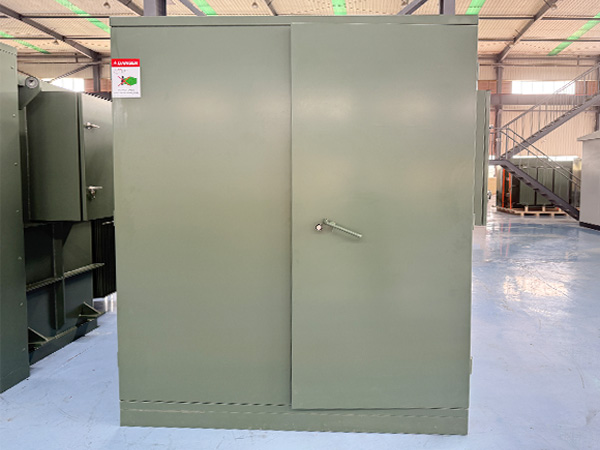
The material you choose for your core directly dictates your baseline efficiency. Modern metallurgy offers several distinct options. Each option balances initial purchase price against long-term energy savings.
Material Type | Primary Characteristic | Best Application | Cost Profile |
|---|---|---|---|
Silicon Steel | Adds electrical resistance to minimize eddy currents. | Standard commercial power distribution. | Low to Medium |
CRGO Steel | Aligns crystal structure to boost flux density by 30%. | Heavy industrial and main distribution grids. | Medium to High |
Amorphous Metals | Uses metal glass ribbons for near-zero hysteresis loss. | Smart grids and continuous-power setups. | High |
Ferrite Cores | Handles extreme frequencies without thermal failure. | RF equipment and switch-mode power supplies. | Niche/Variable |
Silicon Steel: This remains the industry standard. By adding silicon to soft iron, manufacturers increase the material's electrical resistance. This suppresses eddy currents. It is highly reliable but represents a baseline for efficiency.
CRGO (Cold Rolled Grain Oriented) Steel: This is the prevailing choice for modern Iron Core Transformer installations. The cold-rolling process physically aligns the steel's crystal structure with the expected magnetic flux path. This orientation increases flux density capacity by up to 30%. It also allows engineers to reduce the overall core volume.
Amorphous Metals: Manufacturers create these using ultra-thin metal glass ribbons. They cool the molten metal so rapidly that crystals cannot form. This random atomic structure offers exceptionally low magnetic friction. They are ideal for smart grids. However, they carry a higher upfront cost and remain mechanically brittle.
Ferrite Cores: We evaluate ferrite primarily for high-frequency applications. Standard iron becomes unusable at high frequencies due to extreme thermal dissipation and eddy currents. Ferrite solves this, making it perfect for specialized industrial switching applications.
Once you select a material, you must choose a physical architecture. The geometry of the core determines how it handles mechanical stress and physical space constraints.
Core-Type Construction: In this design, the copper windings surround the iron core. This leaves the coils exposed to the surrounding oil or air.
Pros: It is much easier to inspect and repair. The windings receive better natural cooling because they sit on the exterior.
Best for: High-voltage, large-scale transmission applications where voltage isolation is critical.
Shell-Type Construction: Here, the iron core surrounds and protects the windings. It forms a figure-eight magnetic path around the coils.
Pros: It offers superior mechanical protection against short-circuit forces. It also provides tighter magnetic flux containment, reducing stray losses.
Best for: Low-voltage, heavy-duty distribution networks where physical compactness is required.
You must also consider limb configurations. Engineers commonly specify 3, 4, or 5-limb designs. Five-limb cores act as the gold standard in modern low-profile distribution transformers. Because the outer limbs share the return flux, their cross-sectional area only needs to be half that of the inner limbs. This clever physics trick significantly reduces the overall height and weight of the unit.
Deploying a transformer involves managing significant physical risks. Heat represents your primary enemy. According to the Arrhenius equation, thermal degradation remains the leading failure mode for power distribution equipment. If core losses generate excess heat, raising the insulation working temperature by just 7–10°C, the expected lifespan of the transformer is cut in half. You cannot ignore poor core efficiency without risking premature catastrophic failure.
Noise and vibration pose another significant risk. We call this phenomenon magnetostriction. As alternating current cycles, the iron core physically expands and contracts. This microscopic movement creates the characteristic transformer "hum." In sensitive commercial or residential zones, acoustic limits are strictly enforced. To mitigate this, you must specify step-lap mitred core joints or continuous toroidal designs. These geometries reduce physical gaps and silence the unit.
Finally, core material dictates your required cooling class. Buyers must match core heat generation to appropriate cooling methods. Standard efficiency cores often use ONAN (Oil Natural Air Natural) cooling. Heavy-industrial loads generating massive heat require OFWF (Oil Forced Water Forced) systems. Mismatching your core efficiency with your cooling system guarantees operational bottlenecks.
Procuring reliable equipment requires rigorous vendor auditing. You cannot simply trust a spec sheet. A reputable Iron Core Transformer manufacturer must prove their capabilities through documented quality control processes.
First, demand material traceability and testing. The vendor should provide factory acceptance testing (FAT) data proving the specific grade of CRGO or amorphous steel used. They must back this data with ultrasonic flaw detection reports. This ensures no hidden micro-cracks exist within the steel batches.
Second, evaluate their precision manufacturing capabilities. Look for vendors utilizing CNC laser cutting and step-lap assembly techniques. Guillotine cutting often leaves burrs. Poorly cut edges create air gaps during stacking. These air gaps drastically increase magnetic reluctance and cause dangerous localized heating. Precision CNC methods eliminate this risk entirely.
Lastly, verify their post-cut annealing processes. The mechanical stress of cutting, bending, and stacking steel degrades its innate magnetic properties. You must verify that the manufacturer utilizes vacuum annealing. This specialized heat treatment releases internal mechanical stresses. It restores maximum magnetic permeability before final assembly, ensuring the core performs exactly as modeled.
The iron core serves as the vital organ of any AC power distribution system. Evaluating whether to deploy a standard silicon core-type unit or a high-efficiency amorphous shell-type unit requires deep analysis. You must look far beyond the initial spec sheet to calculate total operational lifecycle costs.
As you move forward with your procurement strategy, keep these action-oriented next steps in mind. Always map your core material choice to your facility's continuous energy demands. Audit your physical space to determine if a 5-limb shell-type architecture will save valuable footprint. Match your expected heat generation to rigorous cooling classifications like ONAN or ONAF. Finally, strictly vet your suppliers for CNC precision and vacuum annealing capabilities. By understanding the physics of core losses and demanding tight manufacturing tolerances, you can confidently specify transformers that deliver verifiable ROI through reduced energy waste and extended lifespans.
A: Soft iron possesses high magnetic permeability and low coercivity. This means it is easily magnetized and demagnetized as the alternating current reverses polarity, typically 50 or 60 times a second. Regular solid steel retains magnetism too long. This retention causes severe hysteresis energy losses and dangerous overheating.
A: Alternating magnetic fields induce circulating electric currents, known as eddy currents, within the core material itself. By slicing the core into thin, electrically insulated sheets, the path for these currents is broken. This prevents the core from turning into a massive resistive heater, which would quickly melt the winding insulation.
A: No-load loss, or iron loss, is the energy consumed by the core to maintain its magnetic field, regardless of whether any actual equipment is drawing power from the secondary side. Because distribution transformers are energized 24/7, high no-load losses create a continuous, compounding financial drain.
A: Toroidal cores eliminate physical air gaps in the magnetic path. This results in lower electromagnetic interference (EMI), near-silent operation, and higher efficiency. However, the complex manufacturing process of winding copper through a closed loop makes them significantly more expensive and restricts them to lower kilovolt-ampere (kVA) applications.


