
English
Views: 0 Author: Site Editor Publish Time: 2026-05-05 Origin: Site


The iron core serves as the beating heart of modern electrical grids. It is far more than just a basic structural component. Instead, it acts as the central variable dictating lifecycle efficiency, thermal stability, and operational safety. Every grid device depends entirely on this core to function.
Without a high-permeability core, power transfer through electromagnetic induction would fail. Systems would suffer from extreme magnetic flux leakage. Energy would dissipate rapidly into the surrounding air. This massive leakage would render commercial AC power distribution virtually impossible.
Understanding core function, material grading, and structural configurations remains critical. Procurement teams and engineers must evaluate these factors carefully. They need to ensure long-term performance while selecting a reliable partner. Assessing materials like CRGO steel and comparing core versus shell designs helps buyers make smart decisions. We will explore how these specific elements define a highly robust Iron Core Transformer.
Primary Function: Provides a low-reluctance magnetic pathway, amplifying magnetic flux linkage between primary and secondary windings (improving efficiency to 97%+).
Secondary Functions: Acts as a critical thermal heat sink and provides essential electromagnetic interference (EMI) shielding.
Material Necessity: Laminated silicon steel is mandatory; solid iron causes catastrophic eddy current heating.
Sourcing Focus: Evaluating an Iron Core Transformer manufacturer requires scrutinizing their lamination processes, annealing quality, and structural engineering (e.g., 3-limb vs. 5-limb designs).
Electrical engineers constantly battle magnetic reluctance. Reluctance represents the natural resistance a material offers against magnetic lines of force. Air exhibits incredibly high magnetic reluctance. If you place primary and secondary coils in open air, the magnetic field diffuses immediately. Very few flux lines actually reach the secondary coil.
Iron solves this air gap problem efficiently. It provides a highly conductive pathway for magnetic forces. The core captures the induced B-field and amplifies it exponentially. It essentially forces maximum magnetic flux to cross directly from the primary winding to the secondary winding. This focused pathway nearly eliminates energy diffusion.
Beyond magnetic transfer, the core performs two unsung environmental control functions. First, it manages heat sink dynamics perfectly. The sheer physical mass of the iron absorbs immense heat. It pulls this thermal energy away from the active copper windings. The iron then dissipates this heat safely into the surrounding oil or air. This continuous thermal transfer maintains safe operating temperatures.
Second, the core provides vital electromagnetic interference (EMI) shielding. High-voltage power transfer generates chaotic stray electromagnetic fields. Unchecked, these stray fields easily disrupt adjacent sensitive electronic equipment. The iron structure inherently limits and contains these stray fields. It traps the magnetic energy inside its closed loop.
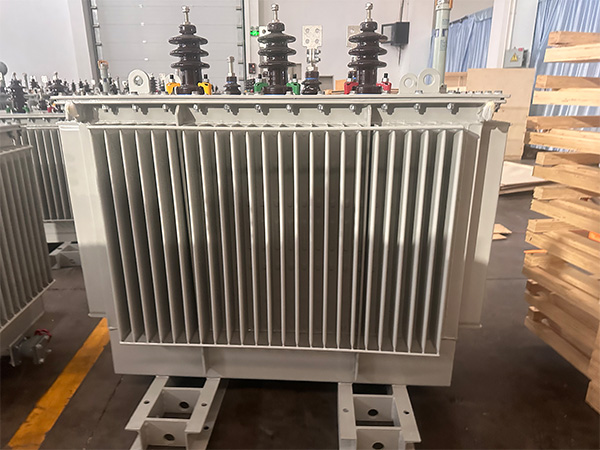
You might wonder why builders never use a single solid block of metal. We call this the "solid iron" fallacy. Placing a solid iron block inside an alternating current field creates a disaster. You can compare this directly to an induction heating element on a kitchen stove.
The alternating magnetic field induces severe parasitic currents inside the metal. We call these unconstrained loops "eddy currents." In a solid block, eddy currents multiply rapidly. They generate extreme friction and heat. Eventually, a solid core will literally melt or catch fire.
Engineers solve this parasitic heating using laminated silicon steel. Manufacturers slice the metal into paper-thin layers. They coat each individual layer using tough epoxy or enamel resins. These microscopic coatings act as electrical insulators. They physically block eddy currents from jumping between the metal sheets.
Selecting the right base metal also matters immensely. Builders specifically choose "Soft Iron" for its uniquely low coercivity.
It magnetizes rapidly.
It demagnetizes instantly.
It perfectly matches standard 50/60Hz AC polarity shifts.
It significantly minimizes hysteresis losses.
Modern engineering relies heavily on Cold-Rolled Grain-Oriented (CRGO) steel. You should view this premium material as your primary evaluation standard. The cold-rolling process physically aligns the metallic grain direction. This microscopic alignment boosts magnetic flux density by up to 30%. Non-oriented variants simply cannot match this energy density.
Physical topology directly dictates facility applications and specific voltage requirements. You must align the core architecture to your physical deployment space. Two primary structural designs dominate the power grid industry.
The core-type architecture relies on a highly vertical structure. The copper windings physically encircle the vertical iron limbs. This open design provides superior natural cooling capabilities. Heat escapes easily from the exposed exterior coils. Engineers typically specify this architecture for high-voltage, high-power distribution. It thrives in open-air substations.
The shell-type architecture reverses this physical relationship. The iron core fully encircles the interior windings. This design forms a highly complex, multi-path magnetic circuit. It feels inherently heavy and densely packed. We often recommend this design when durability matters most.
Shell-type designs remain highly compact. They prove mechanically robust under severe short-circuit stress. The heavy outer iron shell physically braces the internal coils against violent magnetic forces. Engineers prefer this configuration for lower-voltage, space-constrained indoor environments.
Feature | Core-Type Architecture | Shell-Type Architecture |
|---|---|---|
Physical Structure | Windings encircle the iron limbs. | Iron core encircles the windings. |
Cooling Efficiency | Superior natural heat dissipation. | Moderate cooling; densely packed. |
Magnetic Circuit | Single primary magnetic path. | Multi-path magnetic circuit. |
Best Use Case | High-voltage, open-air distribution. | Lower-voltage, space-constrained areas. |
Moving beyond basic theory requires looking at modern power grid applications. The number of vertical limbs dictates how the system handles unbalanced electrical loads. Limb counts directly affect grid stability and acoustic noise levels.
The 3-limb core represents the absolute standard for many dry-type applications. It performs well under perfectly balanced grid conditions. However, engineers note a critical design limitation here. The 3-limb structure lacks an outer return path for zero-sequence flux.
When the grid becomes unbalanced, this zero-sequence flux escapes into the air or the outer tank. This escape causes rapid, catastrophic overheating. To prevent this, engineers often require a buried delta tertiary winding. This extra winding safely absorbs the rogue magnetic flux.
We present the 5-limb core as the true modern standard for heavy distribution. Finding an expert Iron Core Transformer manufacturer ensures you get this advanced topology built correctly.
A 5-limb design offers brilliant material efficiency. The two outer limbs only require 50% of the cross-sectional area compared to the inner limbs. This architecture safely and naturally manages zero-sequence flux. It keeps all magnetic forces contained inside the iron. Furthermore, this heavy containment significantly reduces acoustic vibration. It eliminates the loud humming noise commonly found in older substations.
Selecting a manufacturing partner requires strict actionable criteria. You must shortlist suppliers based on their actual manufacturing realities. Looking at glossy brochures will not guarantee a reliable product. You must inspect their factory floor capabilities.
First, assess their lamination and cutting precision. You need to verify if the vendor utilizes step-lap mitred edge joints. Older factories use simple straight butt joints. Step-lap mitred joints overlap the metal sheets flawlessly. This tight overlap significantly lowers baseline no-load losses. It also drastically reduces acoustic noise.
Next, scrutinize their annealing quality control. A rigorous thermal annealing process remains absolutely required post-cutting. Laser cutting and mechanical punching introduce extreme mechanical stress into the metal. This stress destroys the material's magnetic permeability. Proper heat treatment relieves this stress and restores full magnetic conductivity. Always verify if the manufacturer provides clear QA data on this specific heating step.
Finally, demand transparent testing and compliance records. Ensure the manufacturer supplies verifiable documentation regarding their Factory Acceptance Testing (FAT).
Request ultrasonic material inspection logs for the base steel.
Review the exact core-loss testing results before final assembly.
Check the insulation resistance data for the epoxy coatings.
Only partner with a reliable Iron Core Transformer supplier who eagerly shares these testing metrics.
The iron core defines the baseline of all grid reliability. It flawlessly balances high magnetic permeability with essential thermal dissipation. It mitigates dangerous electrical losses through advanced laminated steel designs. Without this core, efficient power distribution simply collapses.
You must move past baseline specifications during procurement. Stop accepting generic material descriptions. Request detailed core construction methodologies right away. Ask your potential manufacturing partners about their exact material grading, joint types, and limb configurations. Treat the core as the most critical variable in your infrastructure planning.
A: Constant DC current creates a completely static magnetic field. Without the alternating collapse and expansion of flux lines found in AC power, no voltage transfers over. A static field cannot induce voltage in the secondary coil.
A: Copper acts as an excellent electrical conductor but a terrible magnetic conductor. It has extremely low permeability. Iron is required to channel magnetic flux efficiently across the air gap.
A: Laminated cores are stacked from individually cut metal sheets, making them ideal for larger or complex limbs. Distributed gap cores are continuously wound into a tight loop and cut only once, which lowers manufacturing costs and no-load losses for smaller applications.


