
English
Views: 0 Author: Site Editor Publish Time: 2026-07-07 Origin: Site


Pad-mounted transformers often sit only a few feet from homes, sidewalks, parking areas, and landscaped spaces, so their ground-level position naturally raises questions about shock, fire, noise, and everyday proximity. A properly installed pad mounted transformer is generally safe because energized components are enclosed and protected from accidental contact, but that safety changes when the cabinet is damaged, opened, obstructed, flooded, or struck.
Understanding the difference between normal operation and a warning sign helps residents, property managers, and contractors know when to keep clear, report a problem, or take precautions before working nearby.
The enclosure provides the most visible layer of protection. Electrical terminations, switching parts, and the transformer assembly sit inside a locked metal cabinet instead of being exposed at ground level. Bare transformer terminals and other live parts must be enclosed to prevent accidental contact.
Weather-resistant construction also shields the internal equipment from normal outdoor exposure, debris, animals, and casual tampering. JSYW’s 60 Hz single-phase pad mounted transformer uses a compact outdoor structure with a tamper-resistant cabinet, electrical insulation, and protective components. The same enclosure principle applies to larger three-phase units designed for commercial and industrial distribution.
A closed pad mounted transformer cabinet does not make the interior safe for untrained people. Even dead-front equipment can contain hazardous conductors and terminations that require qualified personnel, controlled approach distances, insulated tools, and appropriate protective procedures.
Grounding provides a controlled route for fault current if energized parts contact the metal enclosure. Insulation performs a separate function by maintaining electrical separation among windings, conductors, terminals, and the tank. Together, these measures reduce the chance that normal public proximity to a pad mounted transformer results in electrical contact.
Safety also depends on the wider installation: cable terminations, neutral connections, the concrete pad, grounding conductors, and correct commissioning. Exposed or concealed energized circuits must be identified before nearby work begins, while contact risks must be controlled through de-energization, grounding, insulation, or guarding. Altering the pad, conduits, grounding, or surrounding soil is therefore not ordinary yard work.
Fuses and overcurrent devices interrupt excessive current, while surge protection helps manage abnormal voltage events. Liquid-filled designs use insulating fluid and natural cooling to control heat, and pressure-relief components help limit dangerous internal pressure.
JSYW’s single-phase unit combines oil insulation, natural cooling, and a protective outdoor enclosure. Larger fully enclosed pad mounted transformer units use the same basic safety logic at higher capacities: isolate live parts, manage heat, limit faults, and restrict access. These protections reduce risk but cannot make severely impacted, flooded, forced-open, or incorrectly installed equipment safe.
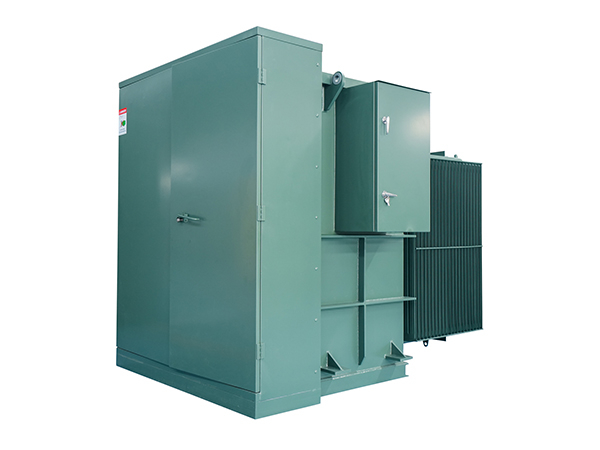
External damage can defeat protections that work during normal operation. A vehicle, mower, forklift, or excavator may bend the cabinet, move it from the pad, damage cables, or disturb grounding connections. Floodwater, erosion, forced doors, and construction activity can create similar problems.
No flames are needed for danger to exist. Internal components may have shifted, seals may have failed, and the enclosure or nearby objects may be affected by a fault. Water-exposed electrical equipment should be treated as potentially energized until qualified professionals inspect it because moisture can cause hidden insulation damage, corrosion, shock hazards, and later fire risk.
An unlocked cabinet, impact damage, or leaking insulating fluid requires immediate attention. The public cannot determine the internal condition of a damaged pad mounted transformer by appearance alone, so approaching it for a closer inspection creates unnecessary risk.
The visible cabinet is only part of the installation; medium-voltage cables approach the pad mounted transformer underground. Planting trees, setting fence posts, installing irrigation, building signs, or trenching can therefore create a cable-strike hazard. In the United States, anyone planning to dig should contact 811 before excavation so the approximate locations of buried utilities can be marked.
A locate request shows the approximate route of buried services but does not remove the need for careful excavation and compliance with local tolerance-zone rules. Workers must also determine whether tools, machinery, or digging activity could contact concealed energized circuits before the job starts.
Some failures begin inside the transformer. Insulation may deteriorate, moisture can enter through damaged seals, connections can loosen and overheat, and excessive loading may increase thermal stress. Protective devices and maintenance reduce those risks, but smoke, leakage, sharp noise, or cabinet deformation means the installation should no longer be treated as normal.
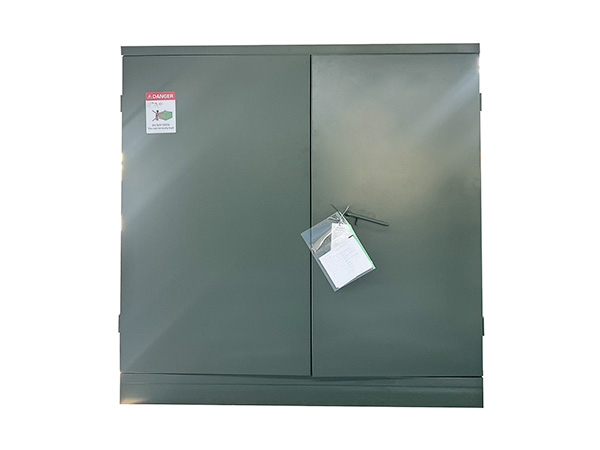
Clearance around a pad mounted transformer is working space for switching, inspection, repair, emergency response, and equipment replacement. The door side usually needs the largest open area because crews must stand there and operate or remove components. Obstructions can delay restoration and make already specialized work more difficult.
No single distance applies to every installation. Common utility requirements include approximately 10 to 12 feet of open space in front and around three feet at the sides and rear, although exact dimensions vary. Property owners should follow local utility standards, easement conditions, equipment labels, and approved site drawings rather than copying a figure from another location.
This clearance is primarily an operational work zone, not a universal health boundary. People may pass an intact unit, but the access area should not become storage, parking, landscaping, or play space.
A small shrub can eventually grow across the doors or crew access route. Plans should account for mature width, height, and root spread, while leaving the operating side of the pad mounted transformer visible. Dense planting can also hide corrosion, leakage, animal damage, or movement of the pad.
Do not raise or lower the soil around the concrete base or direct drainage toward it. Landscaping that blocks access may need to be cut back or removed during maintenance and emergency work. Irrigation should spray away from the cabinet, and digging should begin only after the required utility-location process.
Bins, bicycles, tools, boxes, snow piles, and construction materials should not be stored against the enclosure. They can block doors, hide deterioration, interfere with cooling, or obstruct crews during an outage. Painting, drilling, attaching signs, or using the cabinet as a seat or work surface is equally inappropriate.
Fences must preserve both the door-side work zone and the route from the road to the equipment. Leaving a narrow gap around the pad mounted transformer may still prevent crews from bringing tools, cable, lifting equipment, or a replacement unit. Check the utility easement before setting any posts.
Activity | Safer Approach | Purpose |
Planting shrubs | Use local clearance and mature size | Preserve access and visibility |
Installing a fence | Keep the work zone and route open | Allow maintenance |
Digging | Request utility marks first | Avoid cable strikes |
Storing equipment | Use another location | Prevent obstruction |
Creating a play area | Choose a different site | Discourage tampering |
Children should know that the cabinet is electrical equipment, not a bench, goalpost, or climbing platform. Pets must be kept away from damaged units, leaked fluid, excavation, and areas controlled by utility crews. The public has no reason to touch or inspect the enclosure.
Contractors need specific site information. Landscapers, builders, delivery drivers, and equipment operators should know where the pad mounted transformer sits, which side opens, where the access route runs, and whether underground locating is complete. Vehicle and machine movement should be planned to prevent impact.
Responsibilities should remain separate. Occupants preserve access and report concerns; qualified utility or electrical personnel open, test, isolate, maintain, and repair the unit. Even trained workers inside energized pad-mounted equipment require controlled work methods, suitable tools, and appropriate protective equipment.
A steady low hum can accompany normal transformer operation, and the enclosure may release heat while carrying load. Neither condition is a reason to touch the cabinet. A sudden change in sound or signs of overheating matter more than the simple presence of humming or warmth.
Like other AC equipment, a pad mounted transformer produces extremely low-frequency, non-ionizing electric and magnetic fields. Magnetic-field strength decreases substantially as distance from the source increases. Actual levels vary with load, design, cable layout, direction, and measuring distance, so one universal reading cannot describe every site.
The practical response is to respect the utility work zone and avoid remaining directly beside the cabinet without a reason. Site-specific concerns should be addressed through the utility or a qualified professional rather than generalized online measurements.
An open door, missing lock, bent panel, exposed cable, leaning cabinet, displaced pad, fresh oil staining, smoke, sparks, burning odor, sharp crackling, or sudden popping is not normal. Scorched vegetation or unusual ground conditions around the base also justify a report.
A stable hum differs from an abrupt irregular noise accompanied by odor or visible damage. Do not approach the pad mounted transformer to identify the source, touch the enclosure, or look behind it. Unlocked units, collision damage, leaking oil, smoke, fire, and structural displacement should be reported promptly.
Observation | Usually Normal | Report Promptly |
Steady low hum | ✓ | |
Closed, upright cabinet | ✓ | |
Sudden crackling or popping | ✓ | |
Oil or liquid near the pad | ✓ | |
Open door or broken lock | ✓ | |
Smoke, sparks, or impact | ✓ |
When something appears wrong, create distance instead of investigating. Move away without touching the transformer, leaked fluid, nearby wires, fences, or objects contacting the equipment. Keep children, pets, pedestrians, and vehicles out of the area, then call the utility; contact emergency services for fire, smoke, sparking, collision damage, or exposed components.
Follow four steps:
1. Move to a safe location and do not return for a closer look.
2. Warn others not to approach the cabinet or surrounding ground.
3. Contact the utility and describe what is visible.
4. Call emergency services when an immediate hazard exists.
Never close a damaged door, move the unit, clean leaked fluid, retrieve an object from beneath it, or use water on an electrical fire. A vehicle that strikes a pad mounted transformer may also be energized. Occupants should normally remain inside, warn others away, and call emergency services unless fire or smoke creates a more immediate need to exit.
A pad mounted transformer is generally safe when it is correctly installed, secured, grounded, and kept clear for maintenance. Most avoidable risks come from impact damage, unauthorized access, blocked working space, flooding, or digging near underground cables. Recognizing normal operating conditions and reporting leaks, smoke, unusual noise, or an open cabinet helps protect both people and equipment.
Jiangsu Yawei Electric Group Co., Ltd. offers single-phase and three-phase pad-mounted transformer options for different distribution loads, helping project teams match enclosure design, capacity, and operating requirements to safer, more efficient power delivery.
A: Yes. A properly installed and maintained unit is generally safe because live components are enclosed, grounded, and protected from accidental public contact.
A: Clearance requirements vary by utility, but the door side usually needs the most space. Always follow local utility standards, easements, and equipment labels.
A: A steady low hum is usually normal. Sudden popping, crackling, unusually loud noise, smoke, or a burning smell should be reported immediately.
A: They produce low-frequency, non-ionizing electromagnetic fields. Field strength decreases with distance, so maintaining the required clearance is a practical precaution.
A: Stay away, keep others clear, and contact the utility. Call emergency services if you see fire, sparks, exposed components, or collision damage.


